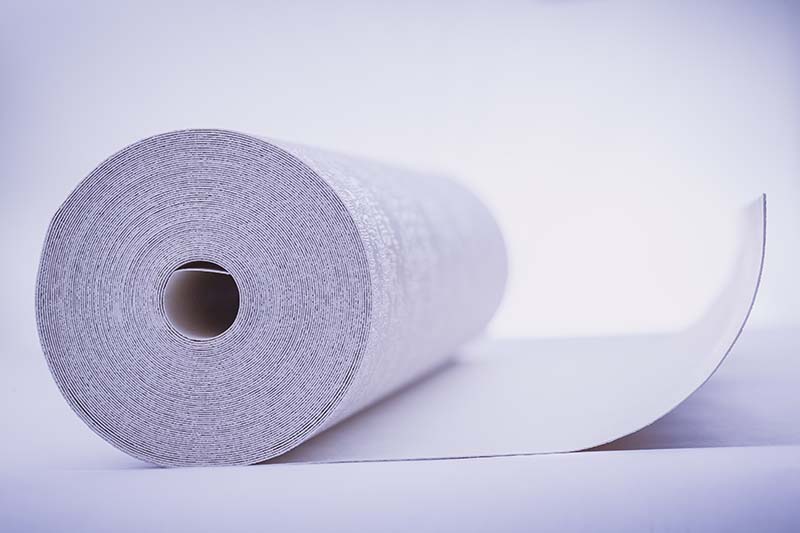
Applying wall lining (glass fleece/non‑woven) yields a smooth, uniform surface and reduces visible hairline cracks and irregularities — an ideal base for paint or wallpaper.
Key benefits
- Masks minor imperfections and unifies texture
- Reduces the risk of hairline cracks in the paint film
- Strengthens the surface and improves washability
- Improves coverage and sheen uniformity when painting
When should you use fleece?
- On taped/spackled plasterboard prone to micro‑movement
- When refurbishing uneven masonry or rendered walls
- For tougher surfaces in hallways, kitchens or kids’ rooms
Materials and installation
- Prep: Clean, fill and sand smooth. Dust‑free surface.
- Adhesive: Apply fleece adhesive evenly with roller/notched trowel.
- Hang: Fit drops vertically and smooth with a rubber spatula. Trim corners.
- Finish: Lightly skim overlaps if needed, sand and prime.
Painting over fleece
Prime to equalize suction and minimize sheen differences, then apply two coats (sheen 5–10 for living areas) for an even overall look.
Maintenance
Fleece‑lined walls are easy to spot‑repair and clean depending on paint quality and sheen.
DANMAG
15+ years experience as professional painter
Expert in quality painting work with focus on customer satisfaction and craftsmanship pride.
Contact usRelated Articles
Full Skim Coating: What, Why and How?
Skim coating explained: materials, technique, dry times and common mistakes.

How to Paint a Wall – A Complete Guide
Learn how to paint a wall properly — prep, tools, primer and paint for a smooth, durable finish.
Wet Room Paint — Guide to the Best Results
How to paint wet rooms correctly — materials, primer, application and common mistakes to avoid.
Ready to get a price or explore services?
Use our instant calculator or browse our prices and services. No signup needed.